Services · Paediatric
Children's eyes are still developing — problems caught early are problems you can actually fix. We make eye checks calm, quick and kid-friendly.
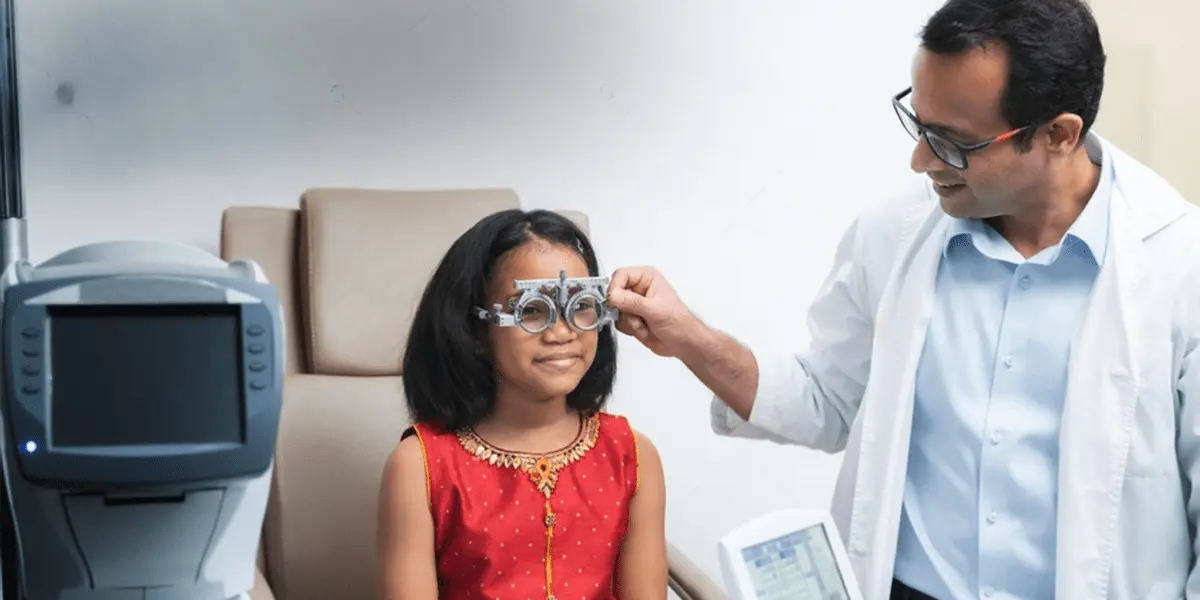
A child who can't see well rarely says so — they assume everyone sees the way they do. That's why vision problems surface as squinting at the board, sitting too close to the TV, head tilting, or falling grades, and why routine checks matter even without complaints.
Childhood myopia is rising sharply, driven by near work, screens and too little daylight. Beyond correcting it, we actively manage progression — low-dose atropine where appropriate, lifestyle counselling (outdoor time genuinely helps), and regular monitoring so the power doesn't quietly gallop. Read more in our guide to understanding myopia.
Why Arham Eye Care
Dr. Hemali Doshi — MS Ophthalmology (Gold Medalist), FPRS fellowship at Nethradhama, Bangalore under Dr. Sri Ganesh. 10+ years, 5,000+ surgeries. Full profile.
Detailed on-site diagnostics before any surgical recommendation. We won't suggest a procedure your eyes can't safely take — often the answer is not surgery.
Modular operation theatre with modern surgical platforms, minutes from Ghatkopar station. Most patients are home the same day.
Common questions
A routine comprehensive check before starting school — around age 4–5 — is a good baseline for every child. Test immediately at any age if you notice squinting, head tilt, sitting very close to screens, or a white glow in the pupil in photographs.
No — this is the most persistent myth we encounter. Glasses simply let the child see clearly; not wearing the right correction is what risks amblyopia (lazy eye) in the developing visual system.
Often, yes. Myopia progression can be slowed with measures like low-dose atropine drops, more outdoor daylight time and sensible near-work habits. The earlier this starts, the more future power — and risk — it saves.
Squint correction is a well-established procedure, and operating at the right age often matters for binocular vision to develop. Not every squint needs surgery — many are managed with glasses or exercises — but every squint needs evaluation.